Socializing Your Banners With Chiclets
A social media application holds promise for online display advertising.
A social media application holds promise for online display advertising.
We all know the lines between social media and online media are blurring. One noticeable way social media marketing is creeping into traditional online display is by incorporating sharing, bookmarking, and syndication chiclets into banners.
Do you know what chiclets are? They are those little Digg, Facebook, Delicious, and Twitter buttons you see nestled around blog posts and articles or consolidated in aggregators like ShareThis.
The definition according to Word Spy is “a small image that links to a syndication file for a web site, particularly a blog.”
Here are a few:

So what do chiclets do? Basically, they enable users to quickly bookmark or share Web content by automatically posting articles, photos, video, and content to your bookmark page or profile. The cool thing is that besides using them in blogs or content sites, you can actually put them in banners so people can incorporate your advertising into their social environment!
I’ll show you how it works with a SnaggableAd rich media banner from Clearspring. You can see this stuff in action for yourself here.
Here’s how it works: a banner like the one below for the movie runs all over the Web (served via PointRoll or another supporting platform). The user interacts with the banner, watches the videos, and decides to share the ad with friends. So he clicks on the “share” button and all the sharing chiclets appear.
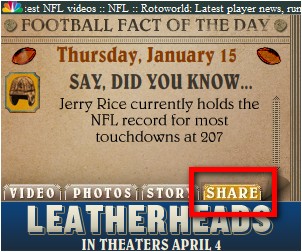
After clicking on the “share” button, the user is presented with a menu of chiclets. In our example, I clicked on Facebook:

Up comes this window that enables me to instantly post this ad to my profile as an application. The image below shows the ad posted on my Facebook page for all my friends to see. They can add it to their profile, watch videos, and view photos from the movie. I am sharing this ad with no cost to the advertiser!

Chiclets, then, are the Web 2.0 glue. They’re binding Web content together in all sorts of ways. As more people start to posting Facebook profiles, use Twitter, and create Delicious and Digg accounts, chiclet usage and acceptance will skyrocket — along with the potential for advertisers.


