Amazon now forbids incentivized reviews, sort of
Yesterday, Amazon announced an update to its community guidelines that will put an end to incentivized reviews for products other than books.
According to Chee Chew, Amazon’s VP of Customer Experience, “Our community guidelines have always prohibited compensation for reviews, with an exception – reviewers could post a review in exchange for a free or discounted product as long as they disclosed that fact. These so-called ‘incentivized reviews’ make up only a tiny fraction of the tens of millions of reviews on Amazon, and when done carefully, they can be helpful to customers by providing a foundation of reviews for new or less well-known products.”
According to a recently published study conducted by ReviewMeta.com, although they account for just 2% of reviews, the number of incentivized reviews has increased dramatically this year. In fact, according to ReviewMeta.com, “Since February of this year, they make up the majority of all new reviews on Amazon.”
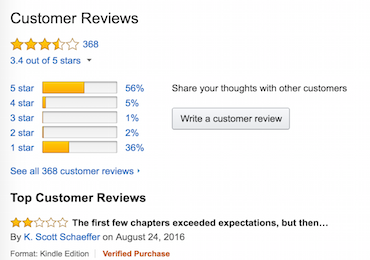
As one might expect, incentivized reviews tend to be more favorable than non-incentivized reviews and reviewers are far less likely to :
Incentivized reviewers are 12 times less likely to give a 1-star rating than non-incentivized reviews, and almost 4 times less likely to leave a critical review in general.
If ReviewMeta.com’s analysis, which was based on a sample of 7 million reviews, is anywhere near representative, this might explain why Amazon has decided to ban incentivized reviews.
Amazon will continue to permit authors and book publishers to provide advance review copies of new books, which is a standard industry practice. And for those not selling books, it will allow incentivized reviews through its Amazon Vine program.
Vine relies on Vine Voices, reviewers that Amazon hand selects based on the helpfulness of their reviews to other customers. Amazon provides these individuals with new and pre-release products. Vine Voices are not paid, and Amazon selects who receives which products. Amazon also delivers the products to Vine Voices, ensuring that a vendor cannot communicate with them for the purpose of influencing a review.
According to ReviewMeta.com, Amazon’s control over the process might be more effective. Although it plans to do an in-depth analysis of Vine reviews, it notes that of the 7 million reviews in its study, Vine reviews, which made up 4% of the sample, had an average rating of 4.2, much lower than non-Vine incentivized reviews and also lower than non-incentivized reviews.
Leave a Reply
You must be logged in to post a comment.