Today, Google released new data in the Transparency Report, showing user data requests received, through which means, and for how many of those requests data was produced and presumably released to the requesting party.
The new data includes a breakdown of requests such as subpoenas or search warrants, and a breakdown of data requests versus user account requests. The data is also broken down by country and time periods.
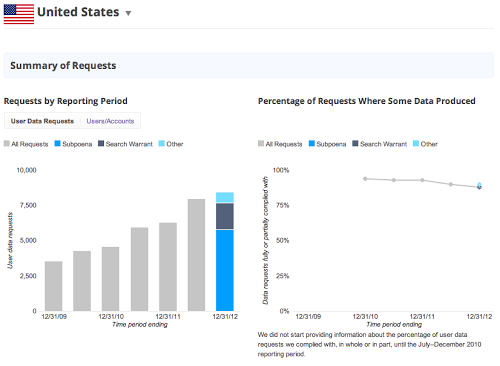
In their blog announcement, Google released the following stats from July to December 2012:
- 68 percent of the requests Google received from government entities in the U.S. were through subpoenas. These are requests for user-identifying information, issued under the Electronic Communications Privacy Act (“ECPA”), and are the easiest to get because they typically don’t involve judges.
- 22 percent were through ECPA search warrants. These are, generally speaking, orders issued by judges under ECPA, based on a demonstration of “probable cause” to believe that certain information related to a crime is presently in the place to be searched.
- The remaining 10 percent were mostly court orders issued under ECPA by judges or other processes that are difficult to categorize.
Google also noted that user data requests have increased by more than 70 percent since 2009.
Google first announced their Transparency Report back in Fall 2010 as part of their government requests tool aimed at giving people information about the requests for user data and content removal they receive from the government. Since then, Google has responded to an average of over 38,000 requests for information or content removal annually.
As part of this change, content removal requests have been removed from the transparency report. Google’s Richard Slagado, Legal Director, Law Enforcement and Information Security, stated they will release those numbers in a separate report from here forward and to “stay tuned” for those data. One has to speculate that if those data warrant their own report, those requests may have increased by double-digit percentages as well.
Is all this data good or bad? Could Google be more transparent about the types of requests filled – in whole or in part? Let us know in the comments below!
This article was originally published on http://searchenginewatch.com/sew/news/2238612/google-transparency-report-adds-details-on-subpoenas-search-warrants-court-orders.
Leave a Reply
You must be logged in to post a comment.